



If you’re drowning in data, you might be interested in the big changes the marketing team at Unbounce, a Vancouver-based SaaS company that helps marketers build better landing pages, rolled out this year.
Unbounce marketers borrowed a page from the product development team’s playbook and restructured around an Agile framework. Agile processes are driving many successful tech companies to build better products, faster. But Unbounce zeroed in on a way marketers and other non-tech people can use Agile to build more productive, collaborative, customer-focused processes, starting with updating their own team structure.
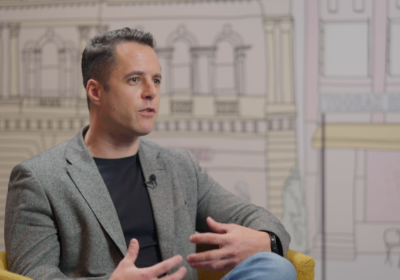
“Before, we were structured conventionally by channels — content, social, partnerships, campaign strategy. We all had our own objectives and KPIs,” says Dan Levy, content director at Unbounce. Now, after “shuffling the deck,” the Unbounce marketing team is structured not around marketers’ work, but around the customer journey.
Here’s how they did it.
Meet the marketing squads
The team is made up of “squads” (an Agile team structure) dedicated to each part of the customer journey. The multidisciplinary teams of designers, content creators, and strategists are focused on:
- Awareness: This squad seeks to get more marketers to discover the Unbounce product and brand. Its primary KPI is lead generation.
- Evaluation: This squad nurtures leads and shows people the value of the product. Its primary KPI: Get people to sign up for a 30-day free trial.
- Adoption: Their job is to turn trial evaluators into paying customers. Their KPI is getting customers to pay for the product two times (two months in a row).
- Growth: This group aims to educate existing customers, with KPIs that include reducing churn and increasing product adoption.
When it was time to make the shift to squads, Levy says, people were placed on squads according to their interests, career aspirations and abilities. “In some cases, people’s roles changed significantly – our SEO manager, for instance, became much more of a full-stack marketer and squad leader. Someone on my team who had been mostly writing for the blog was suddenly spending his time writing web copy and building email nurture campaigns. It wasn’t a perfect scenario in all cases, but we had a lot of talent and folks were up for the change and challenge,” he says.
Join your “chapter”
Every marketer also belongs to a functional “chapter” (an idea that’s also borrowed from Agile). Levy leads the content chapter.
When all of the content creators meet, they discuss “alignment, voice and tone,” he says. “We’re making sure we’re not just looking at our KPIs in silos, but that we’re creating a consistent brand experience. After all, all the customers we’re talking to are the same people, just on different steps in the customer journey. It’s easy to forget that.”
There’s also a strategy chapter, made up of squad leaders. They meet every quarter to set objectives for the squads. “From there, all squad members brainstorm initiatives – in other words, how they’re going to achieve those objectives. Setting objectives at the chapter level ensures strategic alignment; deciding initiatives at the squad level empowers squads to be autonomous and ensures that all squad members from all disciplines (chapters) buy in,” he says.
Shaking up meetings
Before squads, people spent most of their day with people in their own discipline. But now, each squad has daily standup meetings and chapters meet bi-weekly. That shift took some getting used to, Levy says.
But, as with any major restructuring, the group felt some growing pains along the way. “It took a little longer than we hoped for squads to learn how to work with each other,” he says, especially since they were learning what motivates different people in different disciplines.
They also had to make sure squads didn’t become the new silos (the answer, he says, is lots of communication and alignment through chapters and between squad leads and chapter leads). But, the team was realistic about the challenges going in. Levy says, “Our CMO, Jeremy, famously warned us: ‘This will not solve all our pains. The question is where we want our pain!’”
Seeing results
After several months of working in squads, Levy sees results. “We’re working together better, and it’s ensured that all parts of the marketing funnel are being served,” he says. “The top of the funnel can become a siphon. You could spend all of your time on that content. But there’s no point in generating the lead if you don’t have the mechanism to nurture and then educate customers. We’ve plugged the holes in the funnel.”
His advice for other marketing teams who are considering an agile structure: “Take the time to make sure everyone on the team understands what you’re doing this and what both the benefits and challenges are. Set expectations that things won’t be perfect immediately. Make sure you’re having conversations with each team members about their professional development and career direction so that you can place them in the right squad for both them and your team.”
Plus, he cautions: “Don’t be a purist. If something isn’t working, don’t be afraid to shift people around or try something new. Remember that agile is meant to be, well, agile. Experiment often and celebrate failures as well as successes.”
Join the conversation