




Burdened with a difficult and outdated CMS, and a web site that was difficult to navigate, Harvard Law School began a website redesign and migration in 2012. The redesign had two primary focuses: providing efficient tools to allow editors to spend more time on content and less on maintenance, and improving the design and content strategy of the site to give users easier pathways through the materials from the school’s 20 departments.
“If you go into the Wayback Machine, our site was outdated,” said Keith McCluskey, Senior Director, Online Strategy at Harvard Law School. “The CMS was cumbersome and the design and content strategy were heavy on menus and lists. Our more than 100 editors were frustrated by an unwieldy tool that published content very slowly.”
“There were some technological and workflow issues we needed to resolve,” said McCluskey. “And the tool we used really lent itself to bad content strategy practices.”
Harvard Law wanted a site that was better for both users and editors. One new design decision brought a dozen dashboards to the homepage, so that different groups, including students and staff, could easily find content specific to them.

The main content of the school had to be hosted internally, but migrating the hundreds of sites for the school’s clinics, programs, student organizations and affiliated groups into the same site would have been too unwieldy. So while digital agency Modern Tribe migrated the school’s core site, other groups were offered a streamlined solution from WP Engine so that they could build their own sites.
“We love being able to offer a stock solution for everybody,” said McCluskey. “The templates save time and effort and help unify the school’s web content under WordPress.” The Berkman Klein Center for Internet & Society at Harvard had already been offering a WordPress blog platform at Harvard, so “there was a lot of familiarity with WordPress,” he said. Harvard also had a “very DIY” IT tradition which led to a proliferation of home-grown tools and sites, so one of the goals was to standardize tools and simplify the offerings in place, said McCluskey.
The school’s 20 departments were migrated to the new site in stages, using the original site design as a framework. Each month featured a separate sprint with three work tracks: site design, building the backend tools, and migration. Using Scrum as the management process, the school avoided delays that sometimes occur with waterfall-based project management.
“We deliberately did not suggest an entirely new site, because we knew that would be challenging to get approved,” said McCluskey. “We iterated on the existing design, improving on it as we went. We undersold the impact of the design work, but we undersold it in order to keep things moving.”
The process was also transparent and included monthly consultations with the different audiences, from web editors to senior administration, in order to answer questions and address concerns.
The redesign has reshaped the content on the site. At the start of the project, each department was given a spreadsheet of their content for review and asked to evaluate which was critical. The number of pages was then cut back in order to speed up the migration, and ultimately to improve navigation, said McCluskey. After each of the departments was migrated, the content strategist reviewed their content with them and helped fine-tune it. This content evolution would not have been possible previously due to the limitations of the old CMS, he said.
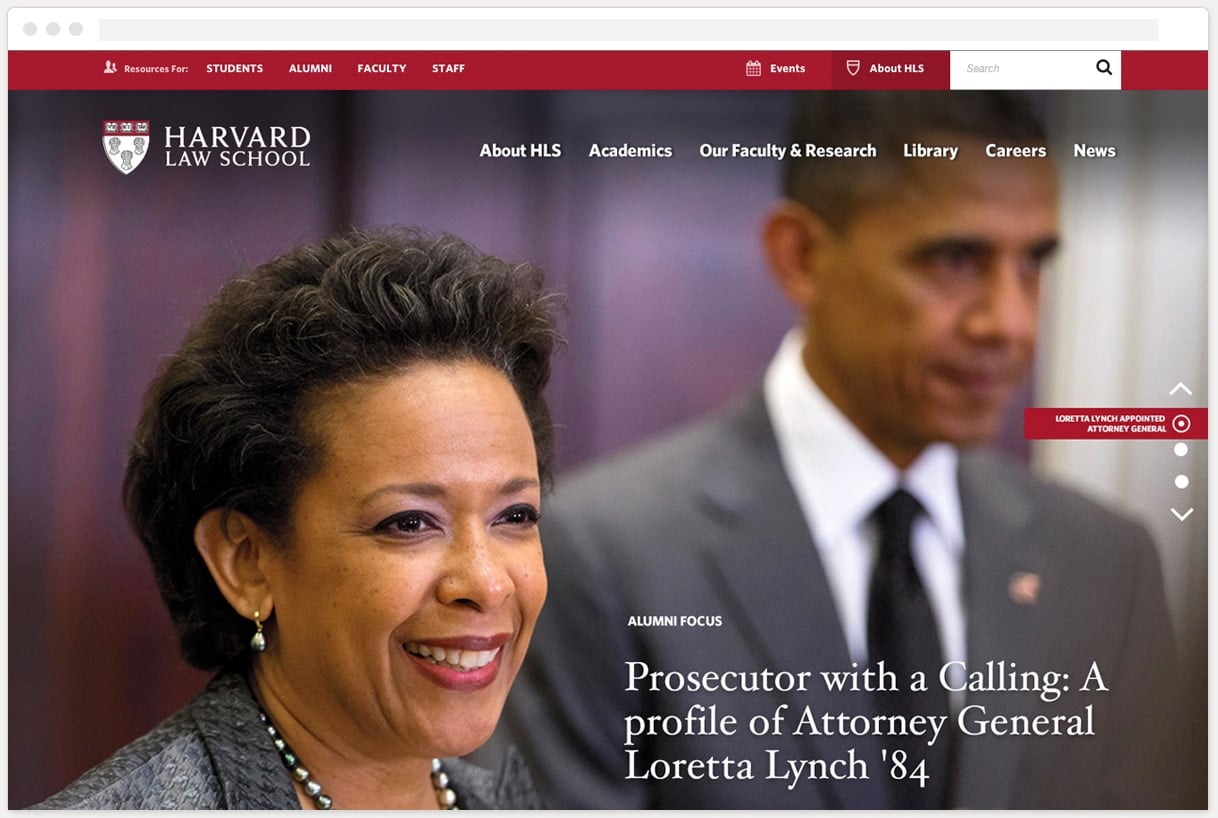
Similarly, users of the site are more engaged because the new design allows them easier access to content. “WordPress allows us to respond to the needs of our audiences and really target the content to their needs,” said McCluskey.
As part of the project, the school began a weekly meeting with departmental web editors to discuss migration-related questions. Led by the school’s content strategist, those meetings continue and offer a venue to discuss departmental needs and site improvements. Regular maintenance sprints implement additional improvements identified at these meetings.
“We’ve maintained the same conversations, so people feel there is a pathway to being heard and there’s a pathway to getting features implemented and their challenges addressed,” said McCluskey.
After the project was completed, Harvard Law has taken on additional new sites with Modern Tribe and WP Engine, including a site for the school’s bicentennial, and an offering for student organizations. In the course of these projects, the school has improved its use of content, thanks to their own learnings and new tools available in WordPress.
“Things that we do now we would not have thought to do before. We’re both more rigorous in how we organize content, and a little more daring in how we display it,”McCluskey said. “We’re trying to push the envelope and lead in the higher education web space. We are thankful to have good partners who help us do that.”
Join the conversation