

The meltdown of the last two decades has left the newspaper business decimated and many media companies struggling to reinvent their business models. That’s going to mean a big shift in attitudes and habits for existing media platforms, but they need to rethink the model to survive.
“We’re ready for another iteration. The media model is going through another big shift,” said Peter Leyden, CEO of Reinvent, a media company that hosts conversations with leaders about reinventing various industries and aspects of society.
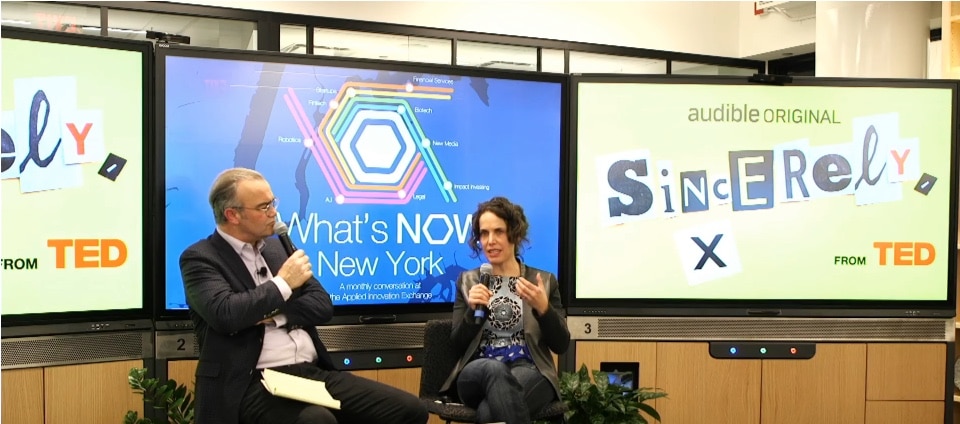
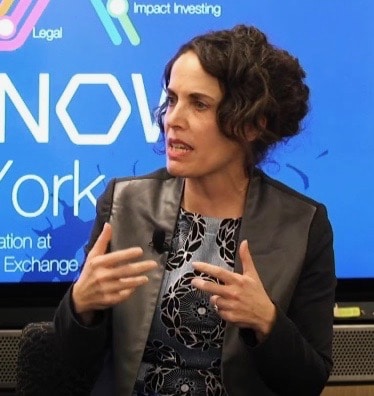
Organizations need to look all over for innovation, look for opportunities to take their content into new channels and partnerships, and open themselves to collaboration from places they would have never considered, said June Cohen, co-founder and CEO of WaitWhat, a content incubator developing media properties. Cohen previously co-founded the digital operations of TED and is credited with expanding the reach of TED talks into the Internet and then expanding the program worldwide. Since founding WaitWhat, it has launched Masters of Scale, a podcast with venture capitalist Reid Hoffman, and Sincerely X, a podcast offering anonymous TED talks.
Cohen spoke at a forum organized by Reinvent and hosted by CapGemini’s Applied Innovation Exchange. In her presentation, she broke down five principles to guide organizations building their next media model:
Rethink where innovation comes from
“You have to find innovation from every corner of the company,” said Cohen. “You have to bring every single mind to the table.”
That will require publishers to change their mindsets, she said. Most media companies are stuck in a model that assumes any content innovation has to come from the editorial team. That ignores the potential contributions of visual thinkers or technologists who may have a different approach
Most media organizations treat their IT as some kind of plumber—the people who fix their things—and they find the business staff a little bit icky. They love that they bring in money, but they don’t want to hear their ideas,” said Cohen. “We have to get past that if we want to innovate today.”
Evoke contagious emotions
In a crowded media environment, publishers have to stop thinking of what demographics or segments they are reaching and focus instead on how they they are connecting emotionally, said Cohen. Contagious emotions such as curiousity, awe, wonder and mastery play to the viewer’s highest potential as a person “but they also have this secret quality that makes you want to share them,” she said. That sharing aspect makes them valuable in the new media environment that leans heavily on sharing content
Cohen shared a TED talk that spread virally despite its dry subject. Swedish health professor Hans Rosling was explaining the effect of fertility rates on economies with the urgency of a sportscaster. That talk has now been seen by more than 12 million people.
“As media profesionals, instead of thinking about how we clickbait people into clicking on a headline… How do we get them to feel something different?” said Cohen.
Think natively, scale horizontally
The media is changing faster than ever before, so publishers need to think of new ways to share content. But they need to think of how to move the content natively into other media as they are creating it.
“It’s no longer wise to think in a single format,” said Cohen. Most media companies think of creating in one format and later adapting the content for another; they need to break out of the idea of locking content in one media, she said.
TED talks began as a conference with lectures on stage, and it seemed as if the concept would not translate to video, given the static nature of a lecture. Cohen noted that, by approaching it as a way to put people in the best seat in the house, they caught on online. She added that the conferences seemed more native to radio, so TED partnered with NPR to create the TED Radio Hour, which paired the talks with the kind of soundscaping NPR uses to tell stories and turned the lectures into radio programs.
“We are more splintered than we ever ever before. We need to think of new ways to get around that,” said Cohen. “If you’re not thinking about other media channels, you’re losing most of the audience for the ideas that you’re sharing.”
Content is the platform
Don’t think of content as something that will live on a platform, but instead think of content that can become a platform itself. Borrow the idea from technology, where developers build apps to enhance a product and find new uses for it, said Cohen.
“Every time someone builds an app for the iPhone it becomes more powerful as a platform, but it didn’t require much of Apple to get a lot from it,” said Cohen. “We don’t think of content as something that builds on a platform, that we can send eyeballs to. We think of how can we create content that other people can build upon.”
Ted is not just a conference or video series any more, but a platform to spread ideas, said Cohen. Speakers lecture for free because they know their talks will spread around the world and TEDx event organizers put on their own events for free for the same reason.
Organizations need to learn to partner, said Cohen. It’s important to have buy-in from the top management and give the partners space to work, said Cohen. When WaitWhat launched its “Masters of Scale” podcast, it partnered with several other platforms including Entrepreneur magazine and LinkedIn, and WaitWhat is now partnering with Mashable to make animated versions of some podcast clips.
Most companies are not good at letting others in, she said. “Things tend to become kinda tribal, where you have this idea that ‘It’s not invented here, we don’t want to do it,’” said Cohen. “But you learn so much more when you learn that partners can build beside you.”
Tap the power of first-person storytelling
“There’s a hidden power there. There’s an ancient part of us that connects with someone telling us a story,” said Cohen.
One of the most powerful “engines of velocity in the world” is the engagement with a subject someone is passionate about, she said, noting TED talks worked because of the passion of the speakers about their subjects.
“In a media environment that is crowded, noisy and filled with outrage … how do we tap into that human storytelling to connect to others?” said Cohen. She acknowledged that one of the traps that people fall into when opening platforms to collaboration is thinking that user-generated content has to be a free for all.
Strict guidelines are necessary to provide guardrails for contributors, she said. That means the organization has to start by knowing what it stands for and being clear about it, said Cohen: “What you tolerate is what you are.”
Join the conversation